“Why Human Translators Still Matter, Even as AI Translation Gets Faster” — The Win-Win Translation Model of HiveMind and KITE
K-content is expanding overseas at a growing pace, but unlike video, web novels remain blocked by a high barrier to entry: publishing them abroad demands enormous time and cost. HiveMind, the startup behind the global content publishing platform Aurorah, set out to solve this problem with artificial intelligence. Aurorah supports the entire publishing journey for web novels — from translation and review to editing, distribution, and settlement.
Yet even though AI has dramatically cut translation time, HiveMind stresses that human translators remain at the heart of the process. The decisive battleground for K-content going global is localization. If all you need is a literal rendering of a sentence, AI is more than enough. But the forms of address and honorifics of literary works, generational speech patterns, and the subtle relationships between characters are hard to capture with dictionary-style translation. Cultural context, historical background, emotion, and humor are territory AI cannot handle on its own.
Recognizing how much localization matters, HiveMind joined hands with KITE, Korea University’s English interpretation and translation society. Led by its president Tae-hyun Jeon, KITE has built hands-on experience through a range of real-world interpretation and translation projects. Rather than stopping at a one-off project, the two organizations aim to build a sustainable collaboration ecosystem in which AI and human translators each play to their strengths. Starting with the recently completed Seodongyo (The Ballad of Seodong), they are shaping a model that raises productivity and quality with AI while letting human translators focus on creative localization.
HiveMind CEO Warren Kim (right) and KITE president Tae-hyun Jeon review a Seodongyo translation in Aurorah. Source: IT Donga
Human-AI Collaboration: Finding Answers in Real-World Content Translation
IT Donga: A university society and a startup are an unusual pairing. How did the collaboration come about?
Warren Kim: We were first introduced through an accelerator manager at one of our investors, and then met in person at an event. KITE is a group of university and graduate students with near-native language skills, and they were looking for quality projects where they could produce real results. HiveMind needed skilled people to validate its AI translation output on real content. Our needs matched exactly.
Tae-hyun Jeon: KITE has many highly capable students, but they rarely get the chance to participate in real content translation and turn it into official career experience. Most interpretation and translation work ends as one-off freelance jobs, which makes it hard to build a long-term career — a limitation we felt keenly. That concern aligned with the problem HiveMind was trying to solve. By combining HiveMind’s platform technology and know-how with KITE’s people and operational experience, this became an opportunity to find out whether AI–human translator collaboration genuinely works.
IT Donga: What was the Seodongyo project you just carried out?
Warren Kim: It is a beta project in English and Japanese — one of roughly 200 commissions we received through the web novel distributor StorinLab — and it is now in its final stages. We plan to gradually add more languages, such as Chinese. The goal was to produce Korean-to-English and Korean-to-Japanese translations ready for immediate global publishing and distribution, through AI first-draft translation, revisions by human translators, and native-speaker review.
Tae-hyun Jeon: As we worked, we focused on pinpointing when human judgment needs to step into AI translation. Specifically, we wanted to map the error types that occur frequently in AI first drafts and the points where localization is needed, and to establish the division of roles between Korean-language and target-language translators. Ultimately, we collected the pain points and improvement ideas translators encountered, to build a translation and review process that can be applied to other web novels and K-content going forward.
Tae-hyun Jeon: We also worked hard to secure tangible outcomes so this collaboration would not end as a one-time activity. The two organizations agreed to keep the door open for follow-on projects, so members can grow into professional translators and localization specialists — and we were treated as genuine participants.
IT Donga: What was it like actually using the AI translation platform Aurorah?
Tae-hyun Jeon: What impressed me most was the glossary and world-setting management. In genres like web novels, where a distinctive fictional world matters, using a general-purpose LLM means re-entering proper nouns every time. Aurorah, by contrast, remembers a term once you confirm it and applies it consistently. The UI that splits text into sentence-level segments also dramatically sped up work on large manuscripts. In the end, the question was how comfortably a person could drive the system — and watching work that used to take more than 100 hours shrink to about a tenth of that, I saw enormous potential in systematizing the workflow.
Tae-hyun Jeon: That said, expressions that require flexible handling — wordplay and nuance — were clearly tricky for the AI. The more a genre depends on tone and manner, like fantasy, martial-arts fiction, or period drama, the more the key challenge remains how finely humans polish the AI’s first pass. We are now refining the detailed settings and building toward an optimal working model.
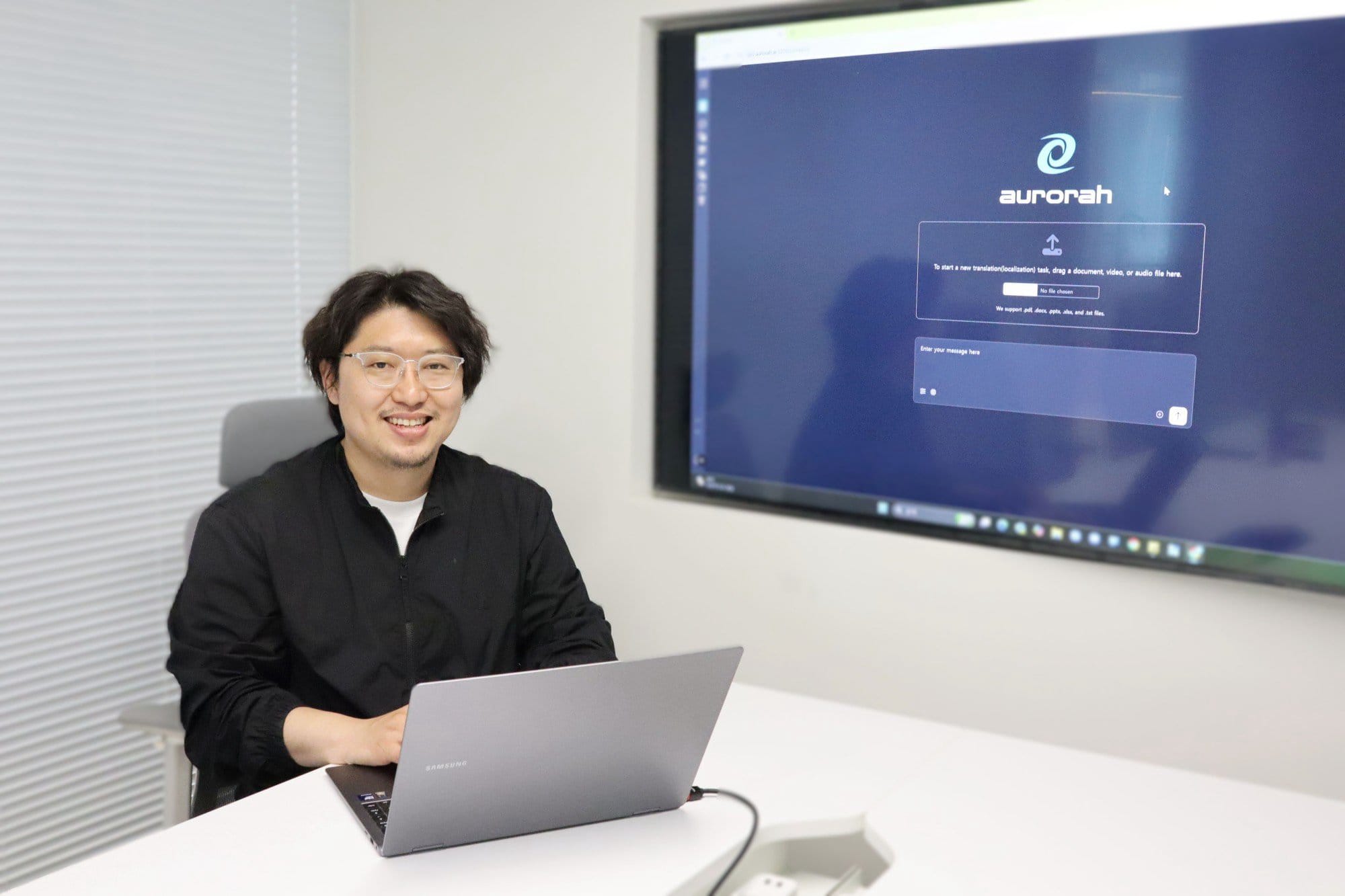
Warren Kim, CEO of HiveMind. Source: IT Donga
The “Human-Centered Translation” HiveMind Champions
IT Donga: Why do you believe human translators are still needed even as AI evolves? How will the translator’s role change?
Warren Kim: Relatively standardized text — industrial or technical documents — AI can already handle almost perfectly. But literary and content translation is different: the texture of a translation must change entirely depending on the reader’s gender, age, and cultural background. Put simply, AI is good at getting the “right answer,” but in literary translation, where no single right answer exists, its limits are clear.
Warren Kim: HiveMind sees the content translator not as someone who merely transfers sentences, but as a “second creator” — closer to a localization expert who re-creates the original’s emotion and intent in another language sphere. However brilliant an English sentence may look from a Korean point of view, it can still feel awkward to a local reader. The more distinctive the content, the more essential what we call “transcendent translation” becomes.
Warren Kim: So the faster AI produces first drafts, the more valuable the human translator who owns cultural interpretation and final expression becomes. Our goal is not to replace people with AI, but to build a healthy ecosystem where human involvement is indispensable.
Tae-hyun Jeon: Because AI acts as a powerful assistant that takes over translators’ simple, repetitive tasks, the nature of the translator’s work will change. Mechanical work — first drafts, repeated sentences, terminology and phrasing consistency — goes to the AI, while translators concentrate on the essential, higher-order work: grasping the author’s intent, rendering the original’s emotion, atmosphere, and character voices, localizing with cultural context in mind, and managing final language quality.
Tae-hyun Jeon: You can also structure a division of labor where Korean-language translators verify that the original meaning is intact, while native target-language translators judge whether it reads naturally to real readers. Participation by translators abroad could become a great opportunity for overseas talent who struggle to build a track record. Because AI compresses first-draft time, translators can devote more hours to raising localization quality. That kind of win-win relationship is the future translator’s role as I imagined it.
Tae-hyun Jeon, president of Korea University’s translation society KITE. Source: IT Donga
IT Donga: Do you think HiveMind’s win-win model will also benefit K-content’s global expansion?
Warren Kim: HiveMind’s ultimate goal is to become a global hub where a Korean publisher can present its works to overseas markets as easily as it serves domestic readers. To minimize suppliers’ upfront burden, we adopted a business model that charges no separate translation or localization fees and instead splits future IP revenue fifty-fifty. It opens a new sales channel for creators and publishers who could not go abroad because of the initial investment barrier. Our win-win model is structured to be in it together from the market-building stage.
Tae-hyun Jeon: The traditional translation market pays a one-off outsourcing fee per project and ends the contract there. Even though content quality decides overseas performance, there was no additional reward for success, so translators’ motivation was hard to sustain.
Tae-hyun Jeon: A model that appropriately combines base compensation with performance-linked revenue sharing gives translators a long-term partnership. It lowers suppliers’ upfront translation costs while HiveMind secures a long-term content and revenue base, and translators share in a work’s success — evolving beyond a simple outsourcing relationship into long-term running mates. In the K-web-novel market, where overseas exports still account for less than 1 percent, I believe this kind of win-win model will become the foundation for global expansion.
The Next Step: Overturning the Old Way Entirely
IT Donga: What are your plans going forward?
Warren Kim: Right now we are focused on building an efficient process for translating web novels and other K-content, and based on the pilot data we are preparing a second project for August. We plan to refine the workflow for placing talent in the right roles and combining native target-language translators by section. Finished content will launch simultaneously on some 50 global platforms, including Amazon, Google, and Apple, and we are also completing the procedures to register as an official publisher on Amazon.
Warren Kim: One thing I firmly believe is that you cannot achieve innovation by simply layering AI on top of the old workflow. You have to boldly overturn the old way. As a startup free from the industry’s inertia, HiveMind had the advantage of designing its processes flexibly from the start. The point we emphasize most is that no matter how far technology advances, human contribution is indispensable in the content industry — and HiveMind wants AI and human translators to create value together within a sustainable collaboration system.
Tae-hyun Jeon: This project was never just about translating one work. It was an important pilot that validated the division of roles between AI and humans, improvements to the platform, how to run translation teams, and future scalability. Our goal is not simply to churn out hundreds of translations in a short time, but to make this collaboration system itself a new trend in the market.
Tae-hyun Jeon: However far AI evolves, it is ultimately the human touch that completes a story’s emotional impact. The message HiveMind and KITE are sending the market through this project is just as clear: human-centered innovation that fully delivers the value of content is the surest strength K-content has for lasting on the global stage.
HiveMind has officially released @aurorah/i18n, an open-source developer library that eliminates translation-key management — the source string is the key, and AI translates at runtime.
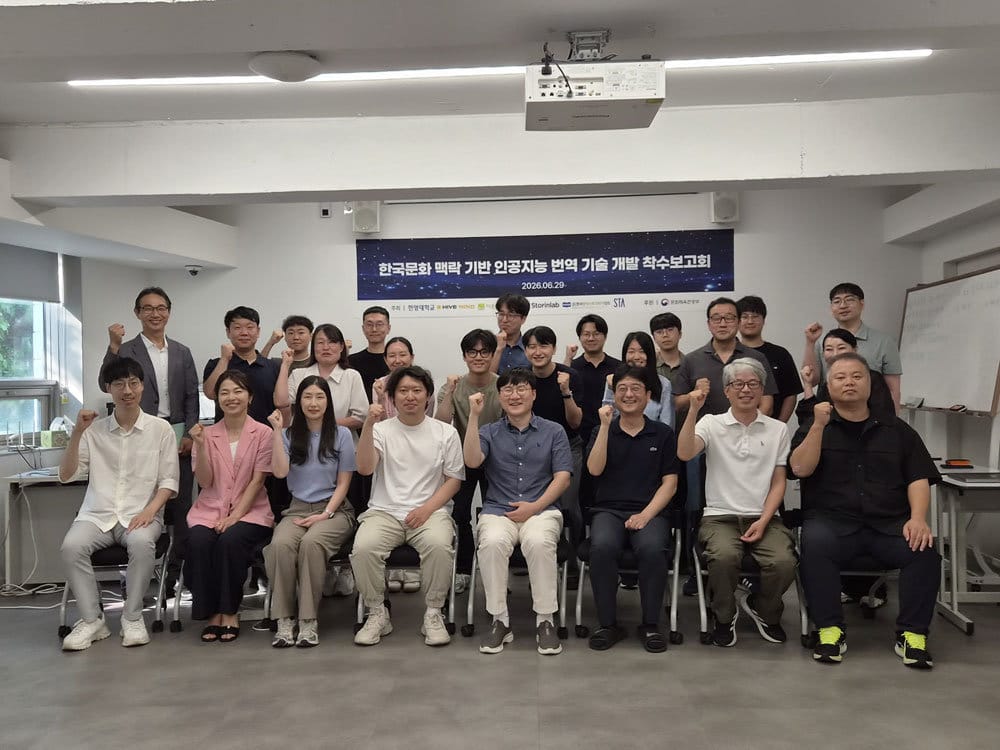
Working with Hanyang University, the company will develop advanced AI capable of understanding Korean emotions, culture, and narratives to drive the global expansion of K-content.
By combining specialized K-content AI technology with human expertise and an IP revenue-sharing model, Aurorah enables Korean publishers and creators to expand globally.
 HiveMind